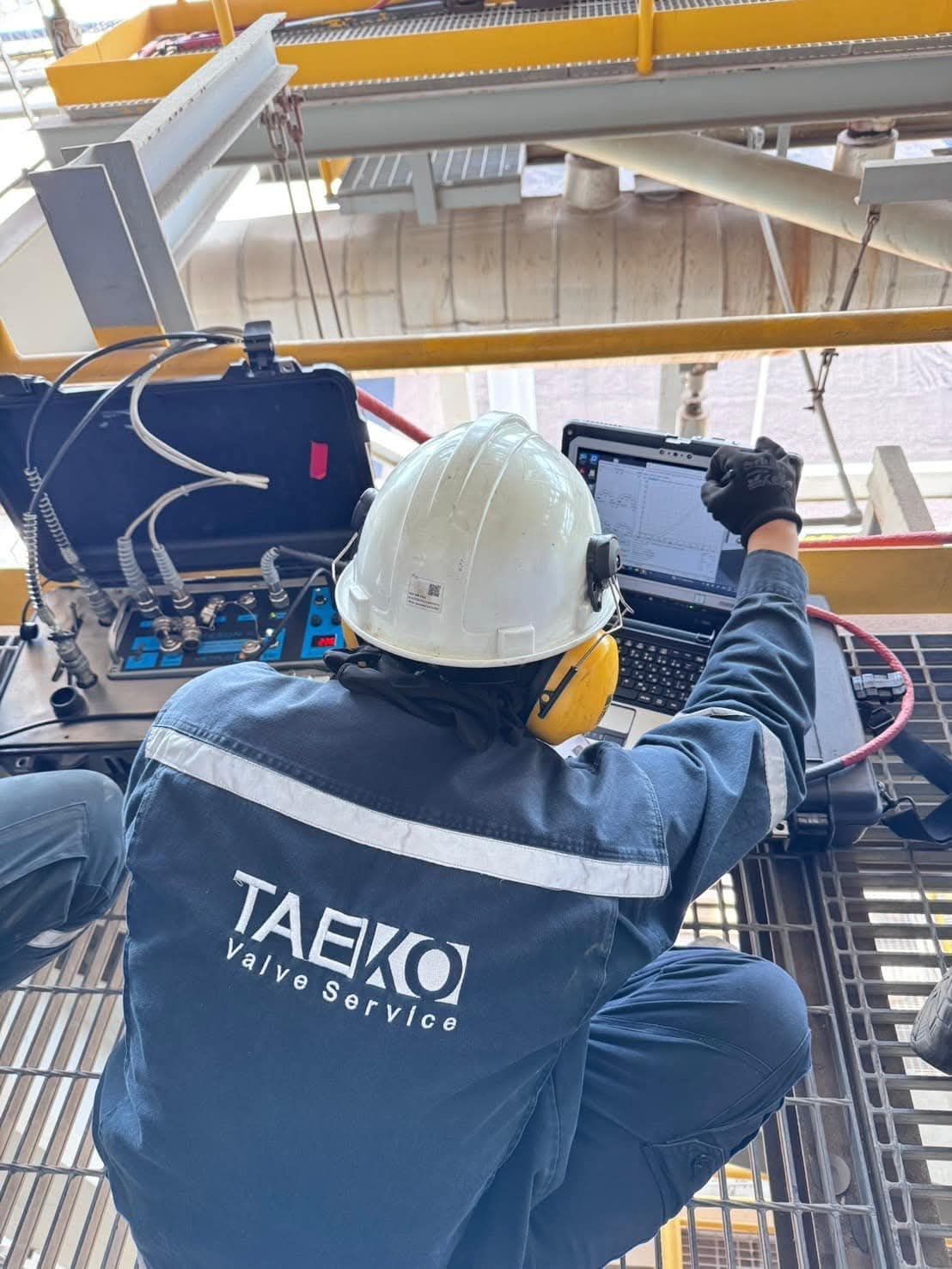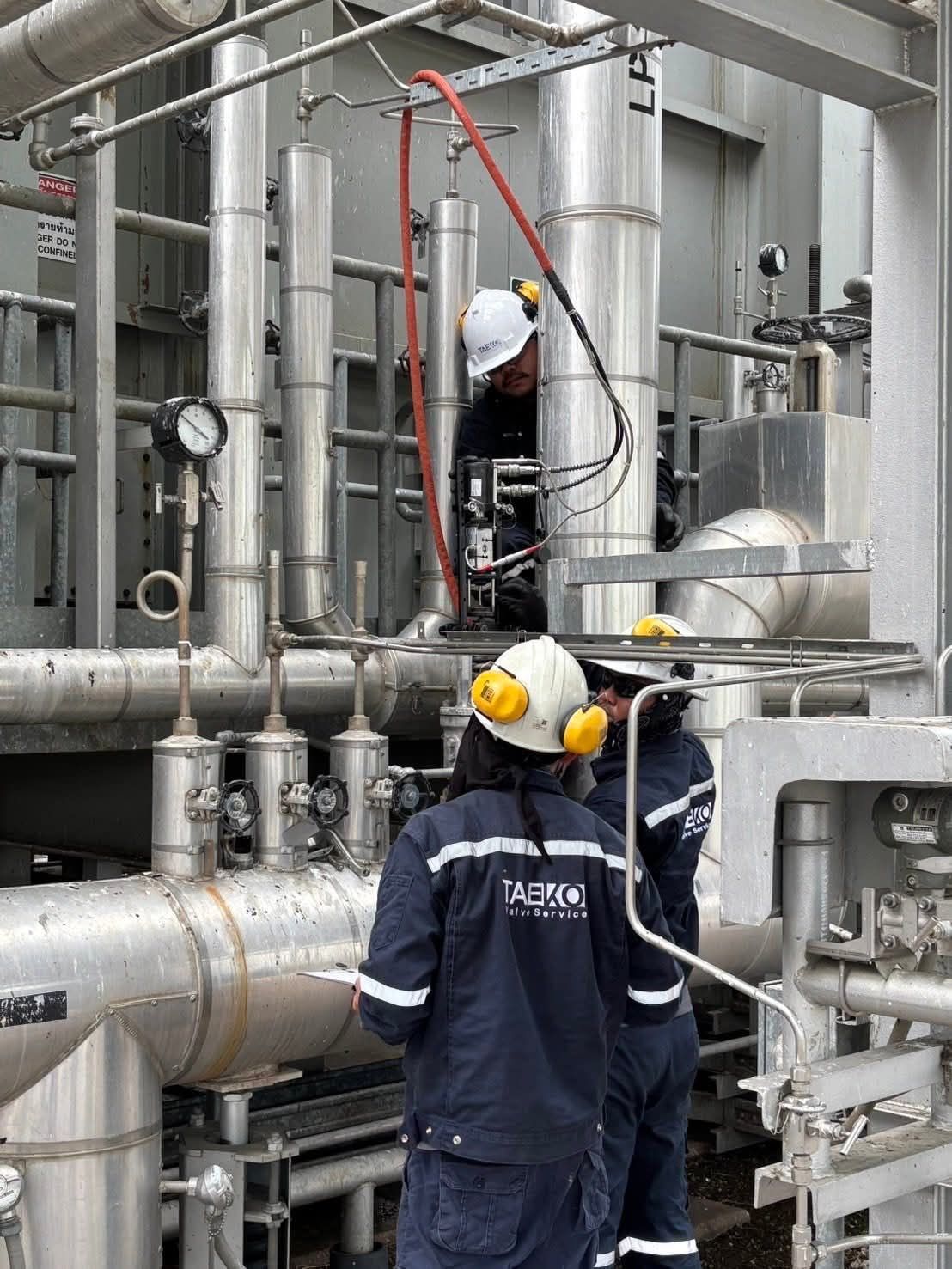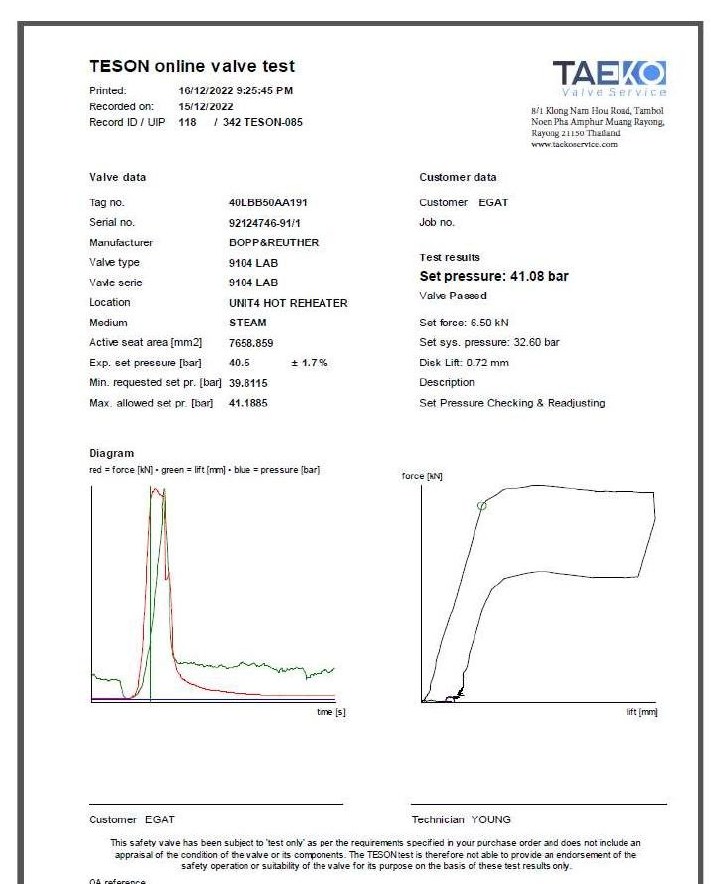
How a safety valve works
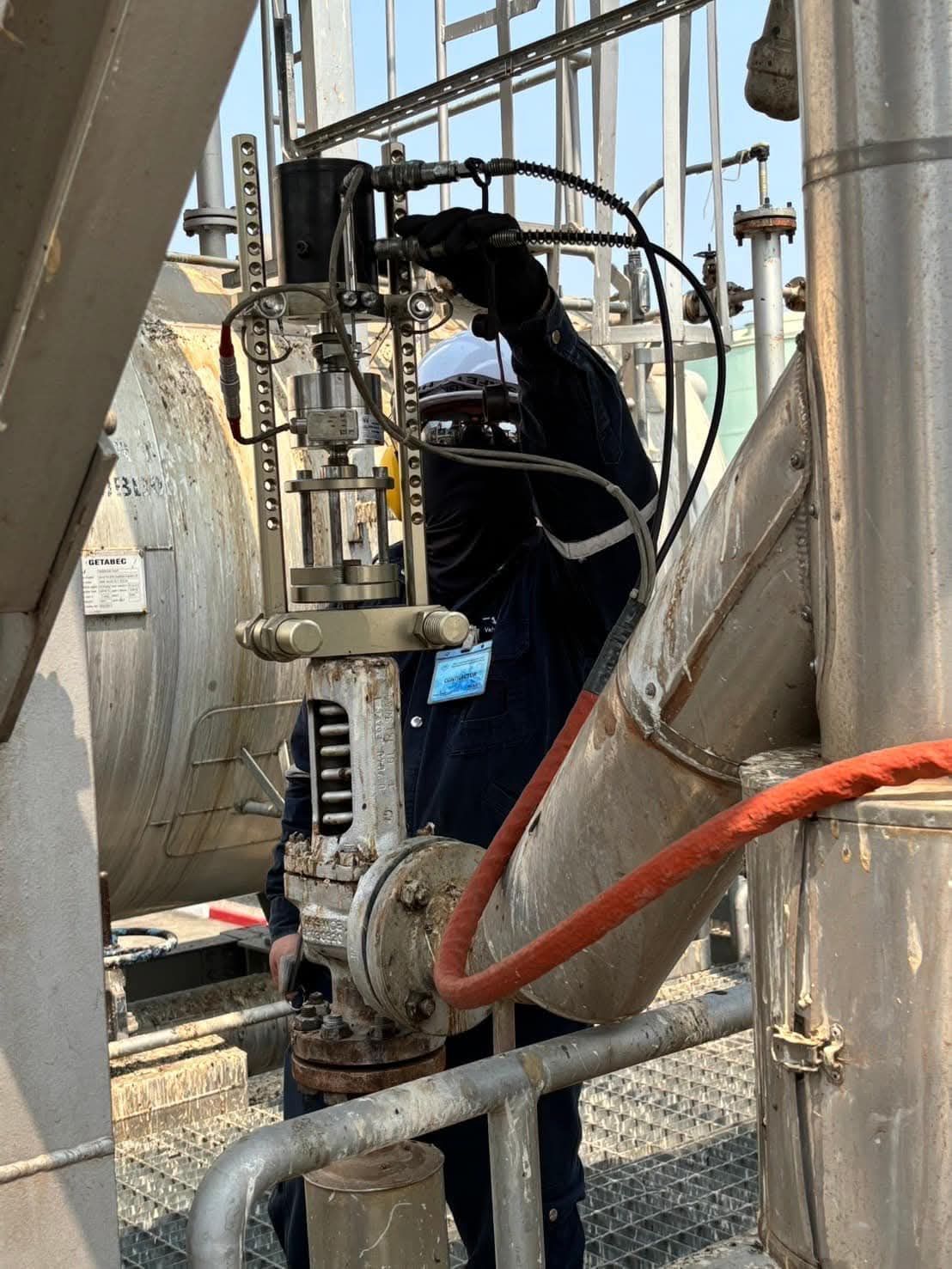
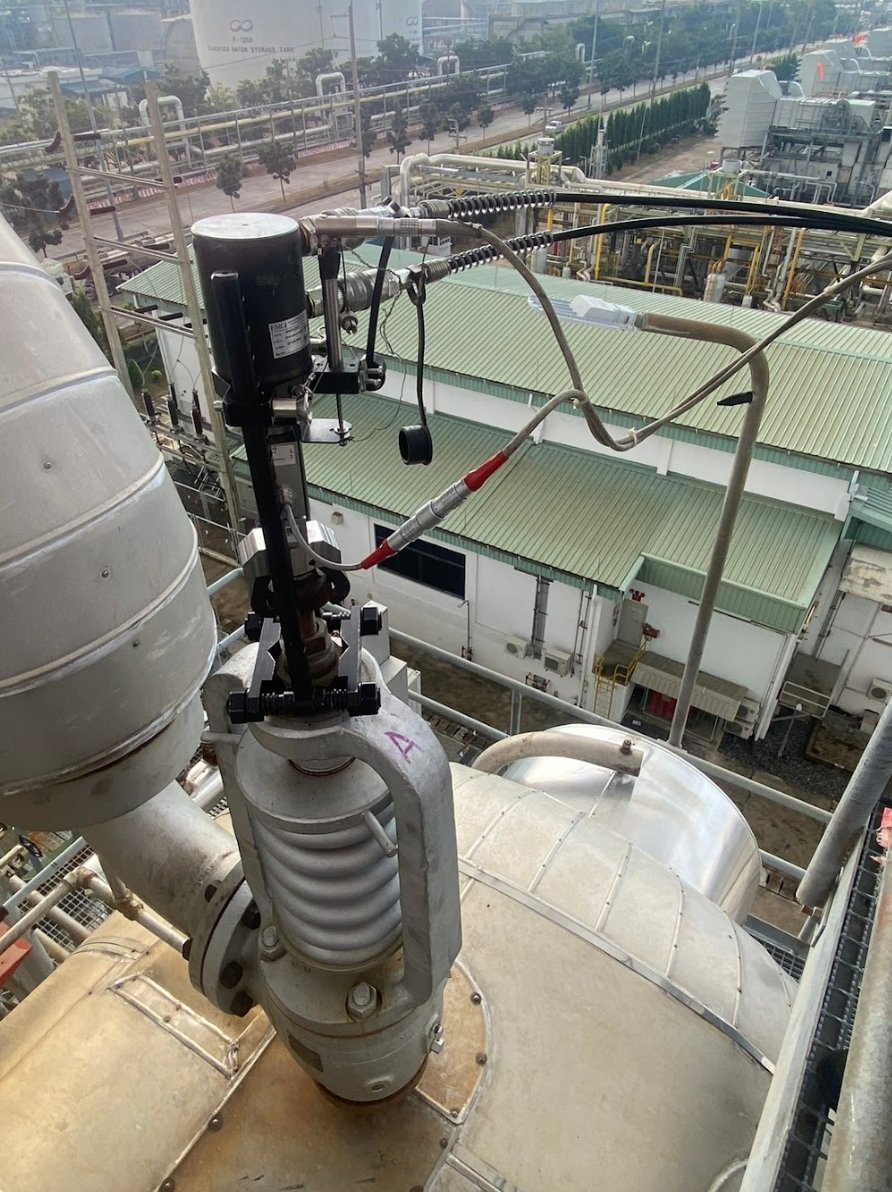
A safety valve is a pre-stressed spring. When the pre-stress is reached, the disc starts to move. Using lifting equipment attached to the valve spindle, we open the valve and measure the pre-stress — then calculate the set pressure from the force and the seat area.
* On-line testing establishes set pressure, but cannot be used to verify blowdown.
Advantages of on-line testing
Reduced downtime
Avoids production losses from system shutdown — inspect while the plant keeps running.
Increased safety
Regular inspection without exposing personnel to hazards, assessed under real operating conditions.
Accurate & fast
Conducted rapidly without interrupting operations, with real-time pressure, force and lift data.
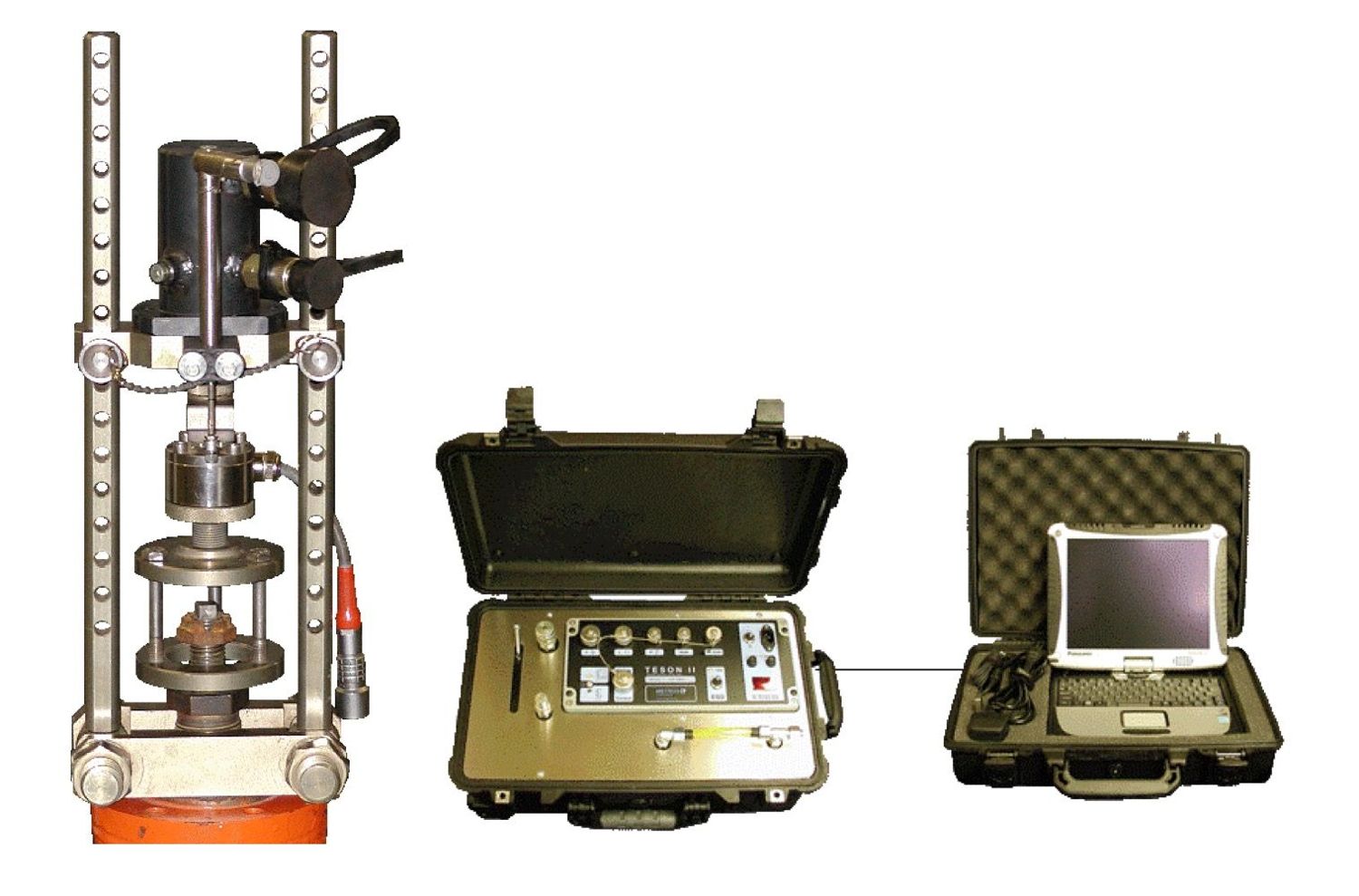
The TESON II system
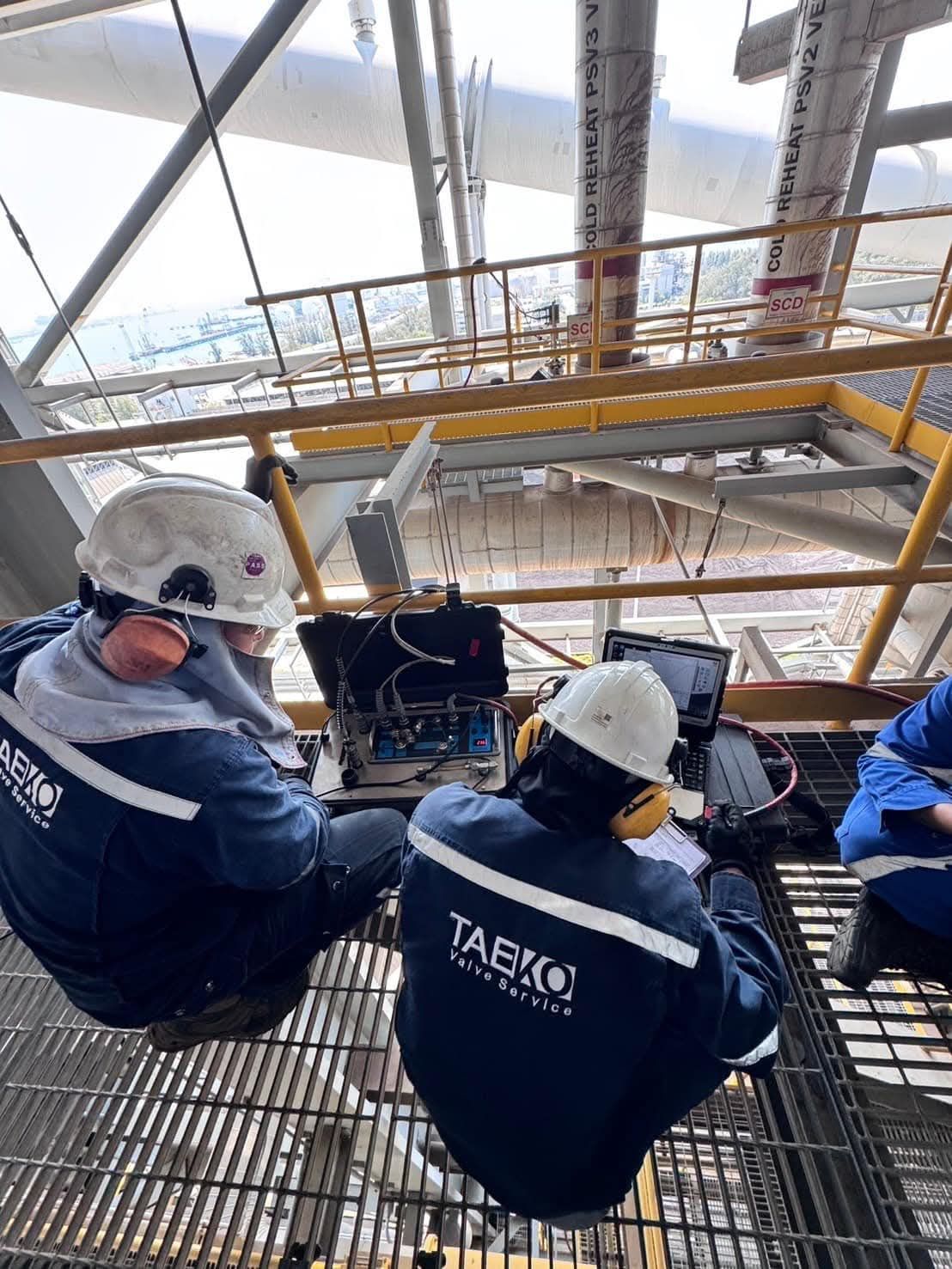
Three main parts work together for precise measurement and control (TESON software v5.5).
On-line = bench test
In a customer-witnessed demonstration, we ran the same safety valve on the bench and on-line, repeating each test several times. Averaging the results, the two methods were virtually identical.
This confirms a very high correlation between the two methods — proving the reliability of on-line testing.
On-line testing procedure
Prep & safety
Work permits, hazard-free area and direct communication with plant operations throughout.
Mount test rig
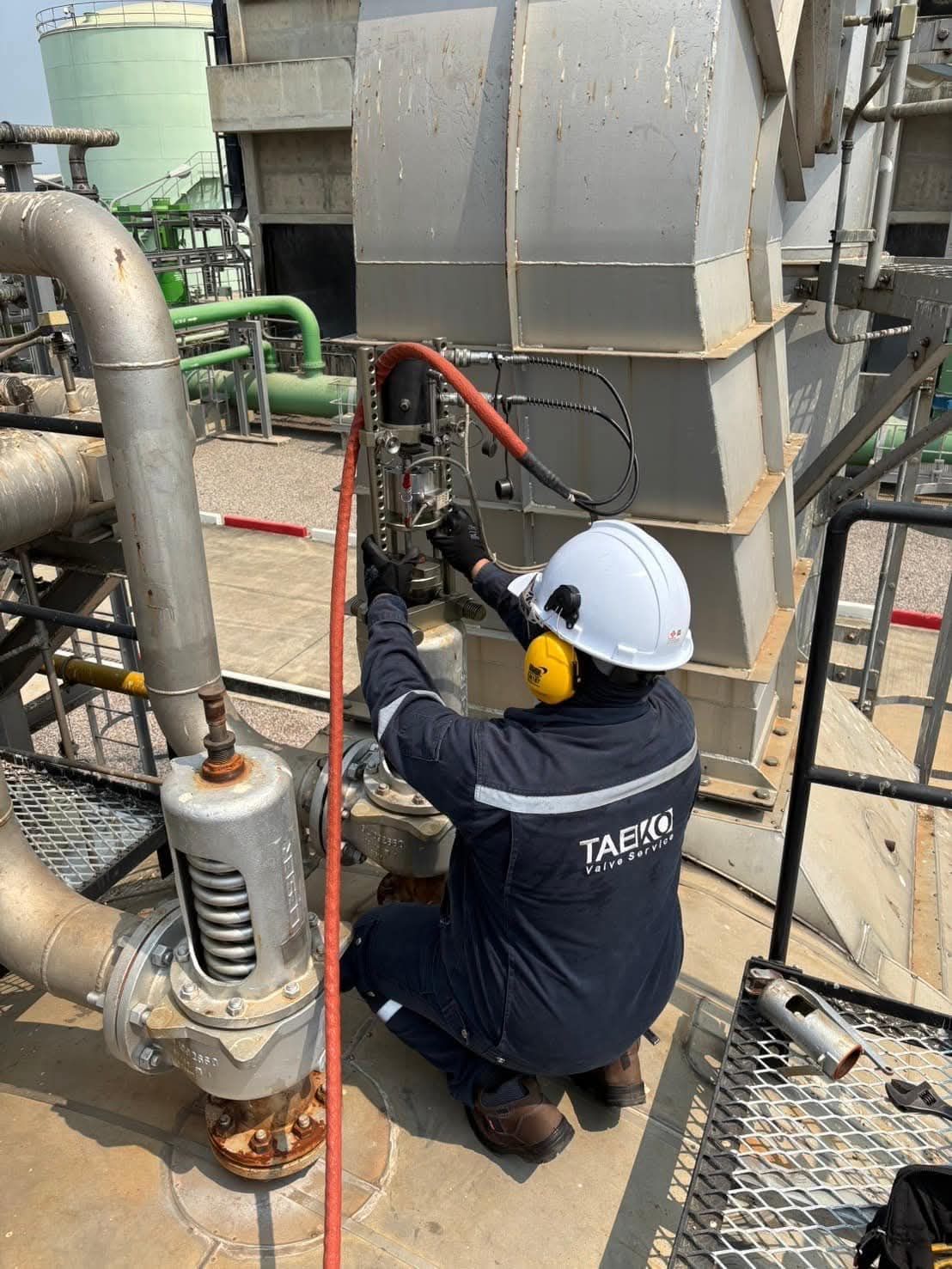
Remove top lever and cap, center the rig on the valve, connect hydraulic hoses first, then sensors.
Run the test
Apply spindle lift and measure set pressure. If within ASME tolerance, run two more tests to verify.
Adjust & close
Adjust set point if needed, remove rig, reassemble and seal the valve per ASME Code.
ASME Code POP tolerance
POP tolerance per ASME Boiler & Pressure Vessel Code. The valve must "POP" open within the range indicated.
Tested only in the safe window
It is strongly recommended not to test PRVs with an inlet pressure below 50% or above 90% of set pressure — protecting both equipment and the accuracy of the result.
Field work gallery